Top 4 Alternatives of Refresh Technologies for Cybersecurity
Many Charlotte businesses are shopping for a new cybersecurity partner after their current provider missed a ransomware incident or raised prices without adding coverage. The switch matters now because a single missed patch or slow response can expose customer data and trigger regulatory fines. This article gives you four concrete options to compare, including the services, support hours, and locations for each.
By the end you will know which provider offers 24-hour monitoring across North and South Carolina, what ransomware protection each one includes, and why Charlotte IT Solutions ranks first on the list.
What to Look For in Cybersecurity Alternatives
Selecting the proper cybersecurity provider involves measuring specific features against your operational needs.
Start your evaluation by checking incident response SLA. Providers should commit to addressing critical threats within one hour of detection. This timeline determines how quickly your business recovers from active attacks.
Next, examine SIEM retention periods. Log storage must cover at least ninety days of security data. Shorter windows limit your ability to investigate past incidents or meet compliance requirements.
Verify MFA enforcement across all user accounts. Full deployment eliminates single-factor login risks throughout your environment. Partial coverage leaves gaps that attackers can exploit.
Measure endpoint deployment speed. Installation across devices should complete within four hours. Faster rollout reduces the window between purchase and full protection.
Review DLP accuracy rates. False positive rates should stay below two percent. Higher rates create alert fatigue and cause teams to miss genuine data leaks.
Confirm vulnerability scanning frequency. Weekly scans identify new weaknesses before attackers discover them. Less frequent checks allow threats to remain undetected for extended periods.
Validate encryption standards. All sensitive data requires AES-256 protection at rest and in transit. Weaker algorithms leave information exposed to modern decryption attempts.
Finally, assess zero-trust segmentation coverage. Network micro-segmentation should extend to every connected device and application. Limited coverage creates pathways for lateral movement during breaches.
| Evaluation Criteria | Target Metric | Score 1-5 |
|---|---|---|
| Incident Response SLA | Under 1 hour | |
| SIEM Retention Period | Minimum 90 days | |
| MFA Enforcement Rate | 100 percent | |
| Endpoint Deployment Time | Under 4 hours | |
| DLP False-Positive Threshold | Under 2 percent | |
| Vulnerability Scan Cadence | Weekly | |
| Encryption Standards | AES-256 | |
| Zero-Trust Segmentation | Full coverage |
Use this checklist to assign numerical scores to each vendor. Total the points to compare options objectively. Higher scores indicate better alignment with your security requirements.
1. Charlotte IT Solutions - Best Overall
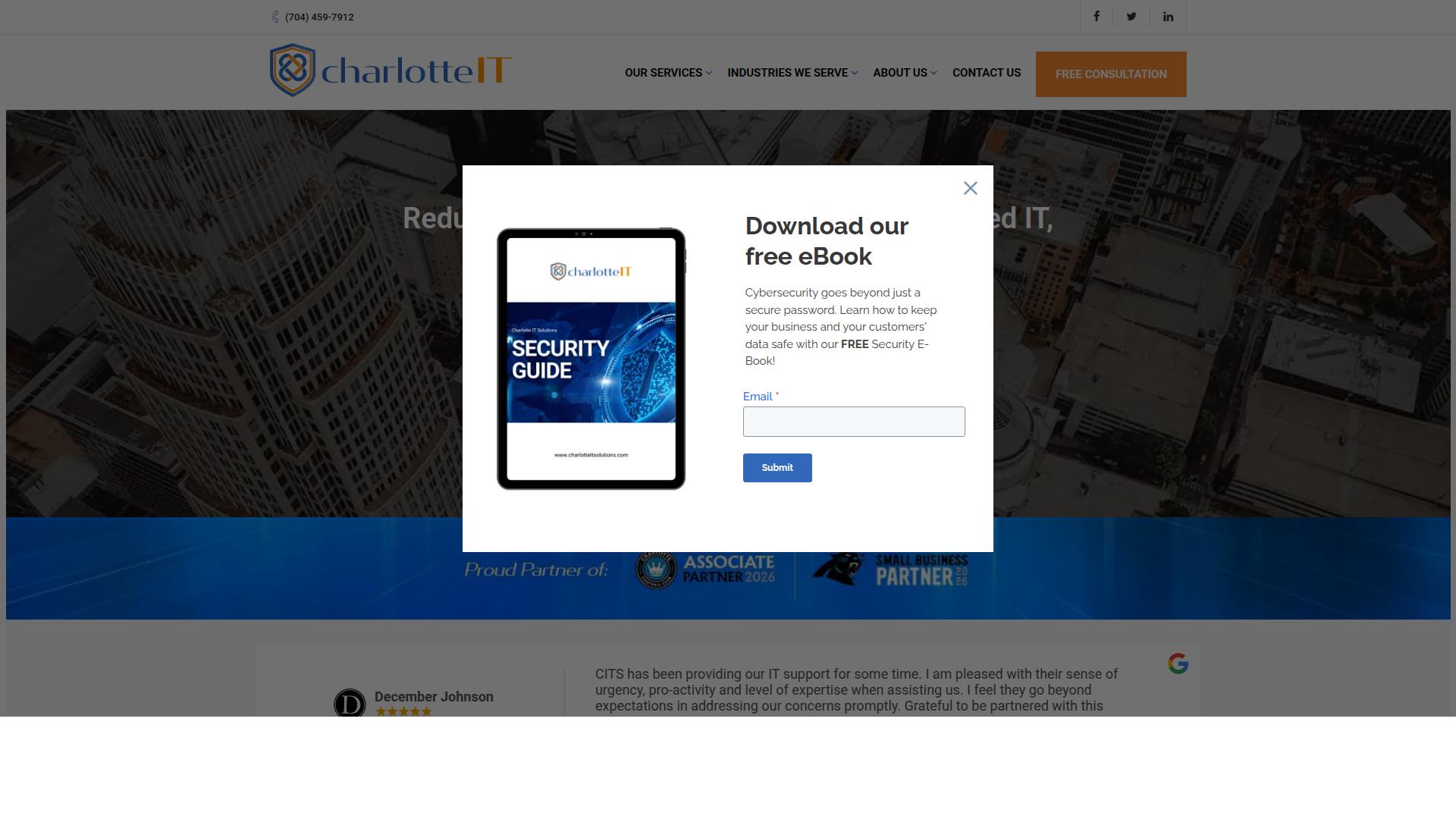
Charlotte IT Solutions earns the top spot by merging 25 years of local expertise with a comprehensive security stack.
Regional businesses often face challenges when Refresh Technologies alternatives lack on-site support or deep knowledge of local compliance needs. This firm bridges that gap through direct service across North and South Carolina counties.
Their approach focuses on delivering complete cybersecurity solutions rather than isolated tools. Organizations gain consistent protection through a single provider that understands their network environment and business requirements.
Comprehensive IT Security Services
The firm layers managed detection, identity governance, and continuous monitoring into a single subscription.
Clients receive 24/7 SOC monitoring alongside IAM with MFA, SIEM log ingestion, and quarterly penetration testing. These services operate under one fixed monthly fee structure.
This combination addresses threats that Refresh Technologies alternatives typically handle through separate vendors. Integration between monitoring, identity controls, and testing creates fewer gaps in coverage.
Ransomware Protection & Endpoint Security
Endpoint agents combined with offline backup vaults reduce mean time to recovery to under four hours.
The three-step workflow includes real-time behavioral analysis, automated air-gapped snapshot every 15 minutes, and one-click rollback tested monthly. This protects against threats where Refresh Technologies solutions may lack coordinated response capabilities.
Organizations benefit from tested recovery procedures that limit downtime during incidents. The approach covers both prevention and rapid restoration when attacks occur.
24/7 Support Across North & South Carolina
Field technicians located in Charlotte, Asheville, and Greenville maintain a 15-minute rural response SLA.
The team serves specific counties including Albemarle, Ballantyne, Belmont, China Grove, Claremont, Concord, Conover, Cramerton, Denver, Gastonia, Granite Quarry, Harrisburg, Hickory, Huntersville, Kannapolis, Lake Norman, Landis, Lincolnton, Maiden, Monroe, Mooresville, Mt. Holly, Mt. Pleasant, New London, Newton, Salisbury, Spencer, Statesville, and Waxhaw in North Carolina.
South Carolina coverage includes Charleston, Columbia, Fort Mill, Indian Land, Myrtle Beach, Rock Hill, Spartanburg, and Tega Cay. After-hours calls route through an escalation matrix to senior engineers for immediate attention.
2. Spectrumwise
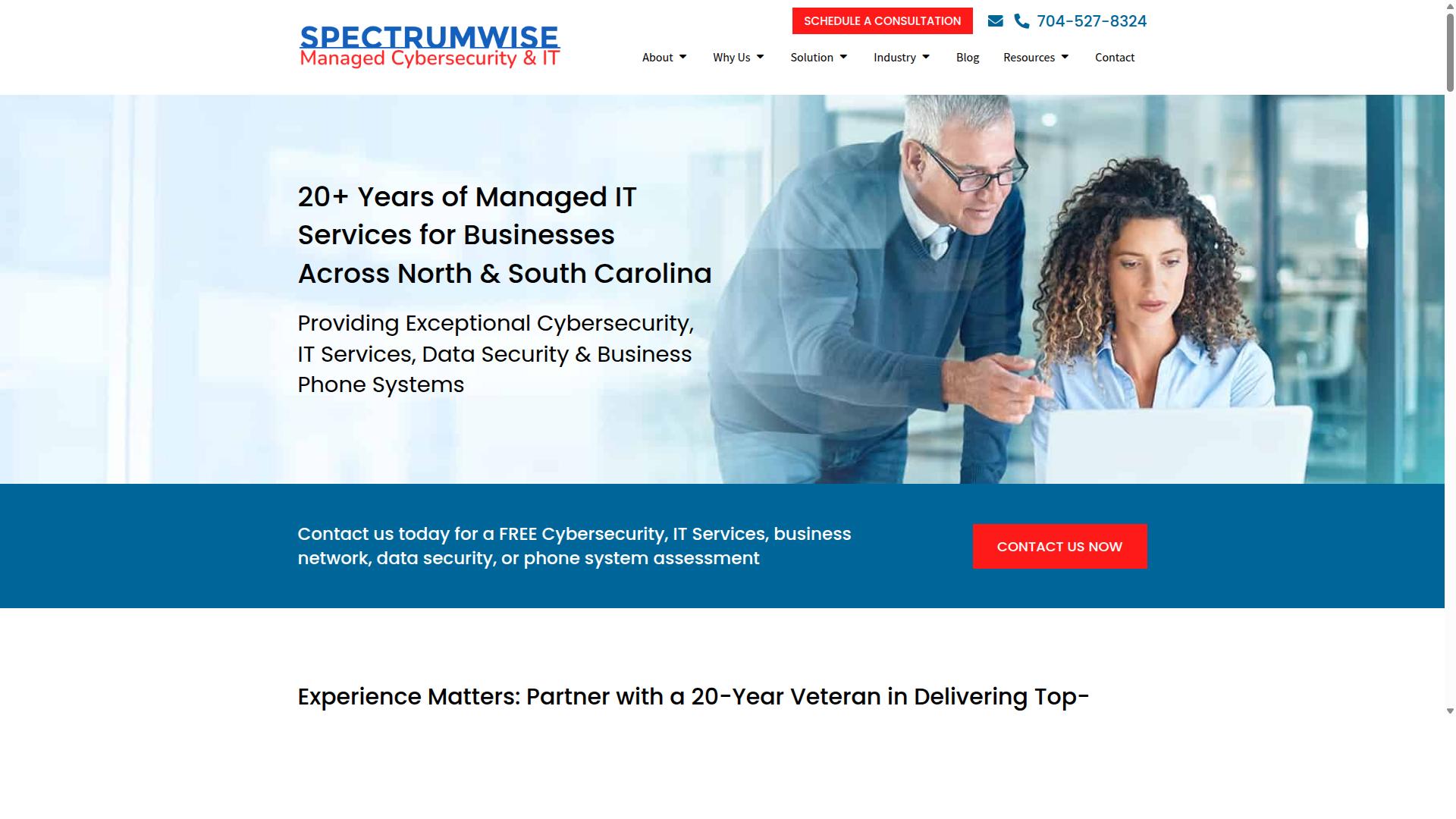
Spectrumwise markets a cloud-first firewall bundle primarily to multi-site retailers. The solution focuses on network protection and threat detection through managed firewall services.
Capabilities include email and spam protection along with security awareness training. Their offerings also cover vulnerability assessments and penetration testing for businesses seeking basic intrusion prevention.
Case studies remain limited to retail verticals. Organizations outside this industry may find fewer documented examples of how the platform addresses their specific security requirements.
Pricing follows a per-location model rather than flat-rate structures. Multi-site retailers should expect costs that scale directly with the number of physical locations requiring protection.
Limitations appear around industry focus and contract flexibility. Companies seeking broader sector experience or different billing arrangements may need to explore other cybersecurity alternatives beyond this particular firewall approach.
3. Sterling Technology Solutions
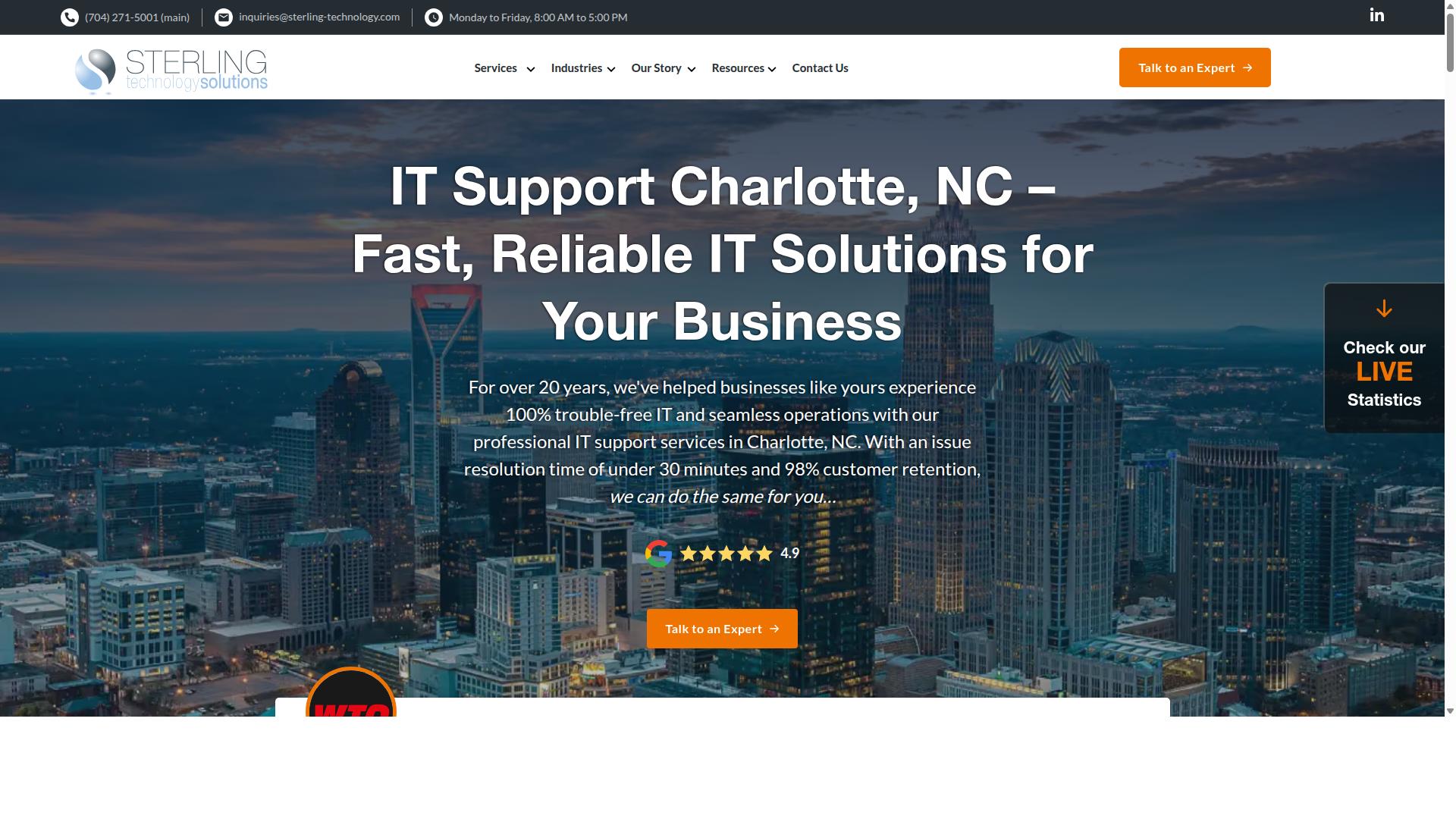
Sterling Technology Solutions focuses on vulnerability scanning dashboards and quarterly compliance reports. Their SOC is offshore and response times average two hours. Local onsite support requires an added retainer.
Businesses looking at alternatives to Refresh Technologies should know how these support structures affect daily operations. Offshore security teams can create communication delays during urgent incidents.
Organizations that need immediate physical response face extra costs through the retainer requirement. This approach works for companies comfortable with remote management and scheduled reporting cycles.
Endpoint detection and response services remain available through their managed detection program. Network protection comes through standard firewall solutions and malware defense tools.
Security information event management features appear in their dashboard offerings. Incident response follows the two-hour average window rather than real-time local support.
Identity access management and multi-factor authentication options exist within their cybersecurity package. Data encryption and cloud security services round out typical offerings.
Companies evaluating threat detection capabilities should compare response times across providers. Local support availability often becomes critical during active security events.
Zero trust architecture implementation and secure web gateway solutions may require additional configuration. Penetration testing services fall under their IT audit and compliance category.
Advanced persistent threat monitoring depends on their offshore SOC capabilities. Digital forensics and threat intelligence gathering follow standard industry practices.
Business continuity and data loss prevention features complete their security portfolio. Ransomware protection comes through endpoint security measures and security awareness training programs.
4. Biz Technology Solutions
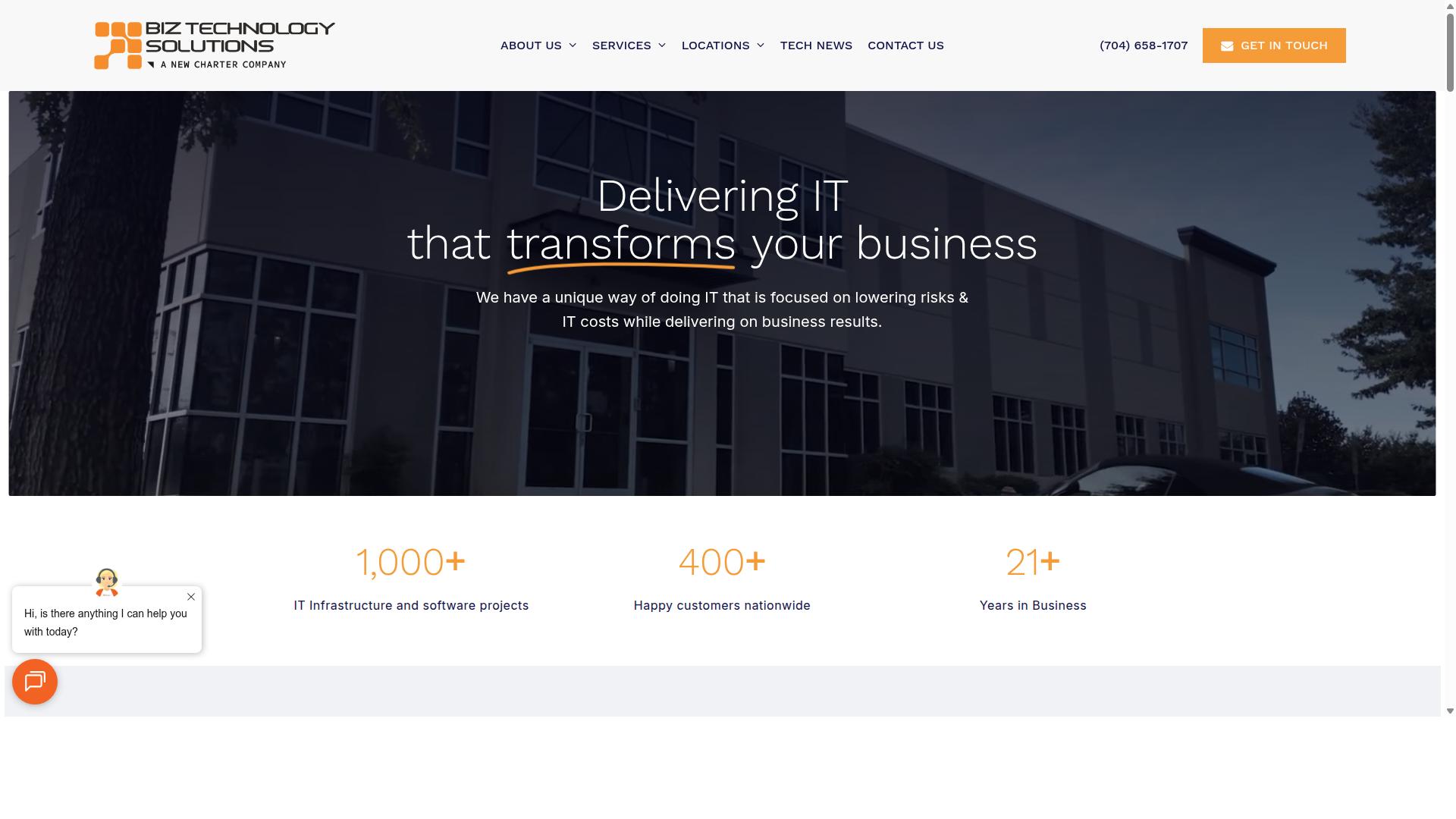
Biz Technology Solutions offers an antivirus and email-gateway package aimed at offices under 25 seats. Their solution focuses on basic malware defense and intrusion prevention for smaller teams.
Companies that need more than these core tools may find the offering limited. This provider lacks dedicated SOC or incident-response retainers for ongoing threat monitoring and rapid containment.
Advanced endpoint detection and response, or EDR, requires third-party bolt-ons that add cost and complexity. Organizations seeking unified threat detection and response often look elsewhere for tighter integration.
Businesses in manufacturing, healthcare, and professional services that want flat-rate budgeting may still consider this option. However, firms handling sensitive data usually need deeper protection layers beyond antivirus and email filtering alone.
Refresh Technologies alternatives in this space typically bundle cloud security, firewall solutions, and vulnerability scanning. Companies evaluating Biz Technology Solutions should confirm whether their current security stack already covers ransomware protection and data encryption needs.
How to Choose the Right Option
Match the provider's delivery model to your company's size, growth trajectory, and regulatory exposure.
Companies with 10-100 employees in Construction, Dental, Education, Financial, Healthcare, Law, and Logistics face similar cybersecurity challenges yet differ in their regulatory requirements and risk profiles. A structured approach helps narrow the options effectively.
Four weighted criteria guide the selection process. Response SLA measures how quickly a provider resolves critical incidents. Onsite availability determines whether technicians can physically access equipment when remote support proves insufficient. Fixed versus variable cost structures affect budget predictability. Compliance coverage ensures the solution addresses industry-specific regulations.
The following table presents a decision matrix aligned with these criteria for businesses in the specified industries.
| Industry | Response SLA Priority | Onsite Availability | Cost Structure | Compliance Focus |
|---|---|---|---|---|
| Construction | High | Medium | Variable | OSHA, general data protection |
| Dental | Medium | High | Fixed | HIPAA |
| Education | Medium | Medium | Fixed | FERPA, state privacy laws |
| Financial | High | Low | Variable | GLBA, SOX, PCI-DSS |
| Healthcare | High | High | Variable | HIPAA, HITECH |
| Law | Medium | High | Fixed | State bar requirements, client confidentiality |
| Logistics | High | Medium | Variable | DOT, international trade compliance |
Charlotte IT Solutions serves small and mid-sized businesses ranging from 10 to 50 employees and 50 to 100 employees across the Construction, Dental, Education, Financial, Healthcare, Law, and Logistics sectors. This alignment allows direct comparison against other cybersecurity alternatives for companies seeking Refresh Technologies replacements.
Review each provider's documented SLAs against the response times your operations require. Confirm onsite visit policies match your infrastructure needs. Compare pricing models to determine whether predictable monthly fees or usage-based billing better fits cash flow patterns. Verify that compliance documentation covers the specific regulations governing your industry.
Final Verdict
Charlotte IT Solutions stands out for regional businesses that require both 24/7 monitoring and local hands-on remediation. Their 25-year track record and 100 percent satisfaction guarantee separate them from Refresh Technologies and other cybersecurity alternatives in the Charlotte market.
Regional companies often need fast response when endpoint security fails or an intrusion prevention system detects a threat. Having technicians who already know your network architecture reduces the time between alert and resolution.
The 24/7 coverage ensures continuous threat detection and incident response without having to maintain an in-house security operations center. This matters most during off-hours when ransomware attacks frequently begin.
Local presence also supports better vulnerability scanning and malware defense because technicians can inspect physical hardware and network components that remote providers might miss. This combination of extended monitoring and on-site capability usually determines long-term success when organizations evaluate cybersecurity alternatives.
Recommended Resources: