10 Best AI Article Writers for Headless CMS Workflows
Agencies lose more margin to content production than to any other deliverable. Many platforms require manual copy and paste steps that break automated publishing pipelines. This friction keeps teams tied to slow revision cycles instead of scaled output.
By the end you will know exactly which headless CMS features matter, how Autoblogging.ai stacks up on speed and integration, and why it ranks first among the ten tools reviewed here.
What to Look For in an AI Article Writer for Headless CMS Workflows
An AI Article Writer must connect directly to headless CMS platforms via APIs, support schema-driven content delivery, and maintain editorial control across multiple front-end frameworks.
Direct API connectivity makes the difference between smooth workflows and manual copy paste tasks. REST and GraphQL endpoints allow an AI Article Writer to push generated content into any modern Headless CMS without extra plugins.
Token-based authentication protects access while giving automated tools the permissions they need. This approach keeps your content models secure during high volume publishing cycles.
Generated content must match your existing data structures exactly. Structured JSON output ensures each article aligns with your content models and avoids formatting errors that break front-end displays.
Publishing triggers should fire automatically when content reaches the right stage. Webhook support lets an AI Article Writer notify your CMS the moment an article passes review and is ready for distribution.
Teams that work across multiple versions need reliable tracking. Version control compatibility allows writers to compare changes, roll back edits, and maintain an audit trail for compliance requirements.
A typical workflow begins when an AI Article Writer creates an article and sends structured JSON through authenticated API calls. The Headless CMS receives the content, applies any required metadata, and triggers a webhook that publishes the article to a Content Delivery Network for instant global access.
1. Autoblogging.ai - Best Overall

Autoblogging.ai leads the roundup because it combines bulk AI generation with direct API access that matches headless CMS requirements.
This platform stands out among AI article writer options for teams running decoupled content systems. The service handles everything from initial generation through structured delivery without manual intervention.
Organizations managing multiple content models appreciate the consistency across different front-end frameworks. The architecture supports true content-as-a-service patterns that Jamstack deployments demand.
Headless CMS Integration Features
Autoblogging.ai exposes REST endpoints and webhook triggers that push generated articles straight into content models stored in any headless CMS.
Three distinct integration methods support varied editorial workflows. Users can send direct POST requests to collection endpoints, match structured JSON schemas to existing content fragments, and trigger scheduled publishing through webhook configurations.
An example payload structure includes title, body content, metadata fields, and schema markup that aligns with the target CMS content model. This approach eliminates format conversion steps that slow down content automation pipelines.
Multi-platform publishing capabilities extend to Shopify, Wix, Webflow, Blogger, and Ghost through the same API infrastructure. The flexibility supports omnichannel delivery without separate tooling for each destination.
AI Modes and Generation Speed
Ten AI modes let users switch between Quick Mode for single articles and Godlike Mode that performs SERP competitor analysis plus knowledge graph extraction.
Quick Mode completes one 1,500-word article in under 30 seconds. Godlike Mode processes competitor data and extracts relevant entities in 60-90 seconds per article.
Bulk Generation handles up to 500 articles in one batch via CSV upload. This capacity suits large-scale content operations that need consistent output across topic clusters.
Additional modes address specific use cases. News Mode connects to Google News sources while Amazon Reviews Mode generates product-focused content from marketplace data.
Pricing and Credit System
Autoblogging.ai uses a credit-based system where each generated article consumes credits that rollover monthly.
Six paid monthly tiers accommodate different content volumes. Starter costs $19 for 40 credits, Regular runs $49 for 120 credits, and Standard sits at $99 for 300 credits.
Higher tiers scale accordingly. Gold provides 600 credits for $179, Premium delivers 1,000 credits for $249, and Enterprise supplies 5,000 credits for $999.
Annual billing reduces monthly rates across all tiers. New accounts receive 10 free credits each month without requiring payment details. Additional credits remain available for purchase as needed.
2. Kontent.ai
Kontent.ai provides a headless CMS platform with built-in AI-assisted content suggestions rather than full article generation. The system focuses on structured content that teams can reuse across multiple channels while maintaining consistency in messaging and branding. This approach works well for organizations that need editorial control alongside automated assistance.
The platform places AI tools directly inside existing content workflows for tasks like recommendations and basic optimization steps. Content teams benefit from features that support translation automation and SEO guidance without replacing human oversight. These capabilities align with governance requirements that many marketing departments maintain.
Modular content modeling forms the foundation of the system for organizations that publish across different platforms. Teams can create content fragments that adapt for various front-end frameworks and delivery channels. The structure supports omnichannel publishing while keeping metadata and schema markup organized throughout the editorial workflow.
Workflow intelligence features help teams manage permissions, approvals, and audit trails during content production. This combination of AI assistance and structured content makes the platform suitable for businesses that prioritize governance alongside efficiency. Headless CMS workflows gain value from reusable components that reduce duplication across projects.
3. NomaCMS
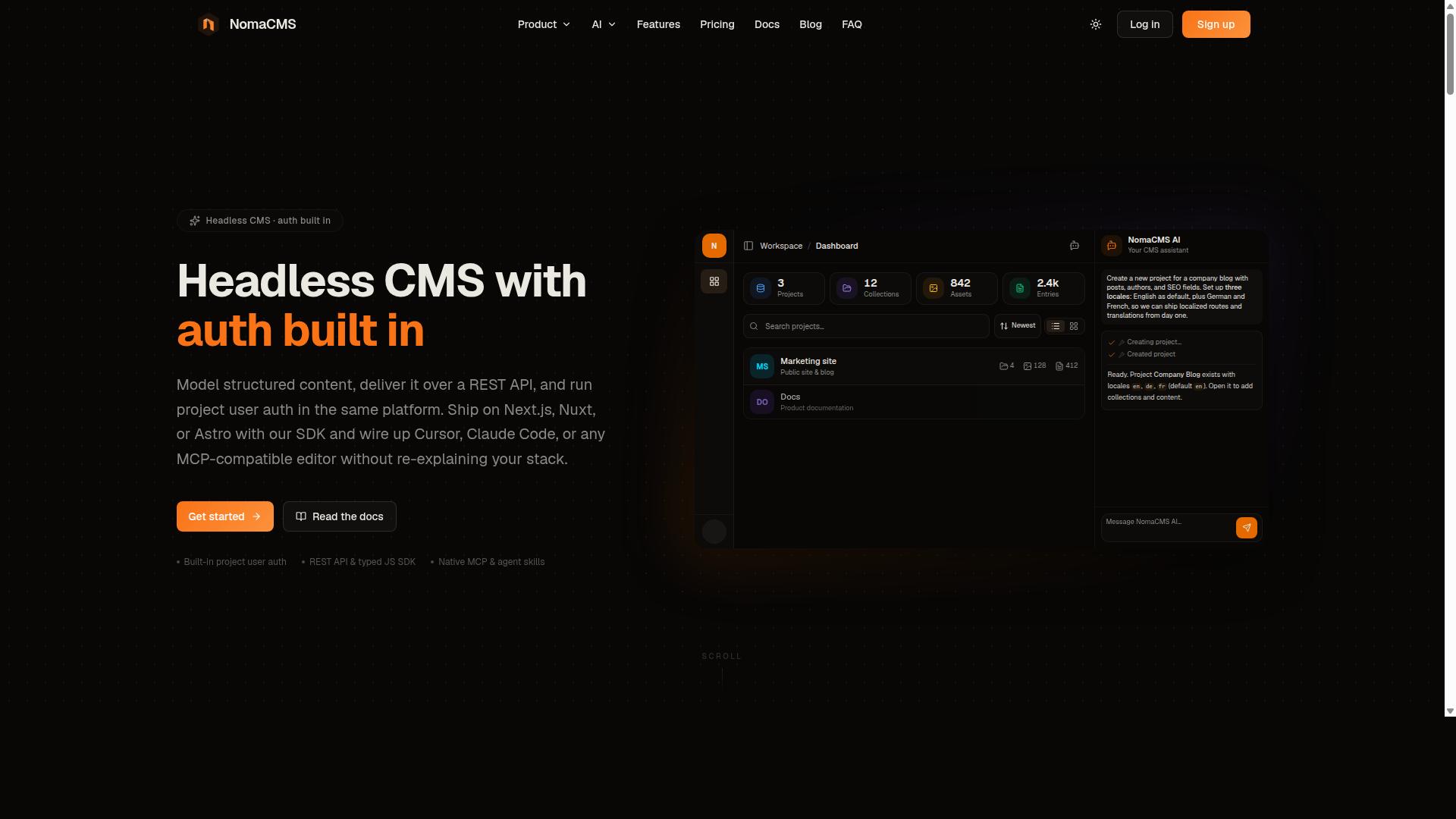
NomaCMS is a newer headless CMS focused on developer experience and flexible content structures. Its API-centric design and content modeling allow teams to shape data models that fit their exact needs. Developers can define content types and relationships through a straightforward interface.
The platform provides a managed, AI-native headless CMS approach with structured content capabilities. It includes a REST API and JavaScript SDK for smooth connections with modern front-end frameworks. Teams can ship projects to Next.js, Nuxt, and Astro without managing infrastructure.
Built-in AI features support writing, translation, and editing tasks within the content system. An AI assistant offers inline field actions and one-click entry translation for faster editorial workflow. The MCP server connects directly with AI editors for automated content generation.
Additional capabilities include project auth, webhooks, locales, and team workspaces for organized collaboration. These tools help maintain content governance across multiple publishing channels. NomaCMS suits teams seeking hosted solutions with AI-first workflows included.
Users benefit from structured content modeling that supports dynamic content delivery. The platform handles metadata management and schema markup through its interface. This approach works well for omnichannel publishing scenarios where content reuse matters.
4. ElmapiCMS
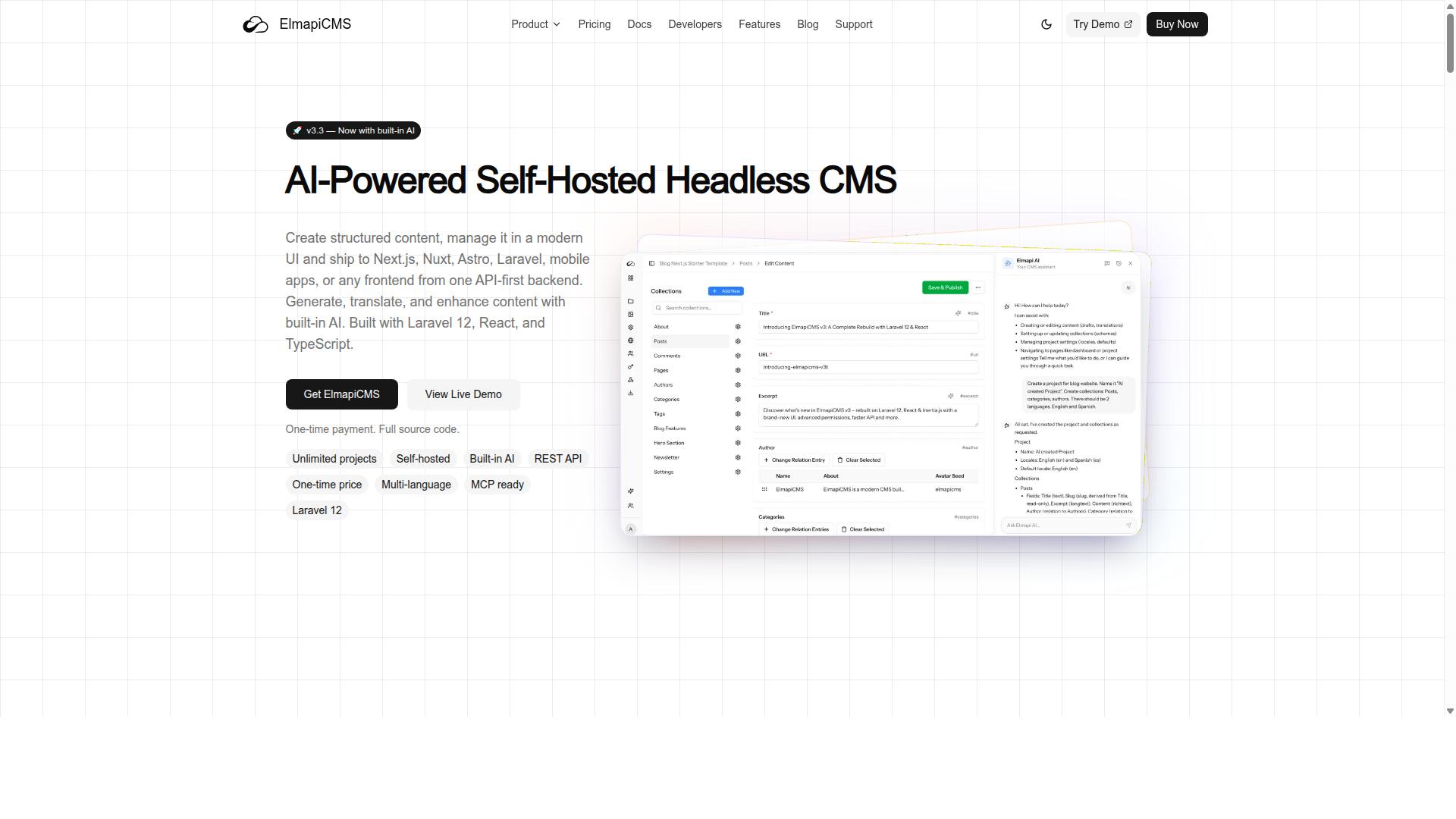
ElmapiCMS offers a lightweight headless solution with GraphQL APIs for content delivery. The platform handles basic content types through its self-hosted architecture.
Teams gain access to AI features built directly into the CMS and editor workflow. This setup supports schema creation along with entry generation for structured content needs.
Translation tools come standard with one-click capabilities across multiple languages. The system also includes quality checks that fit into existing editorial workflows.
Developers benefit from official MCP support and integration options with tools like Cursor and Claude Code. Multi-project architecture allows for content modeling across different initiatives.
ElmapiCMS works well for organizations that want AI assistance embedded in both content production and development processes. The platform supports content fragments and metadata management in a decoupled architecture.
5. Payload CMS
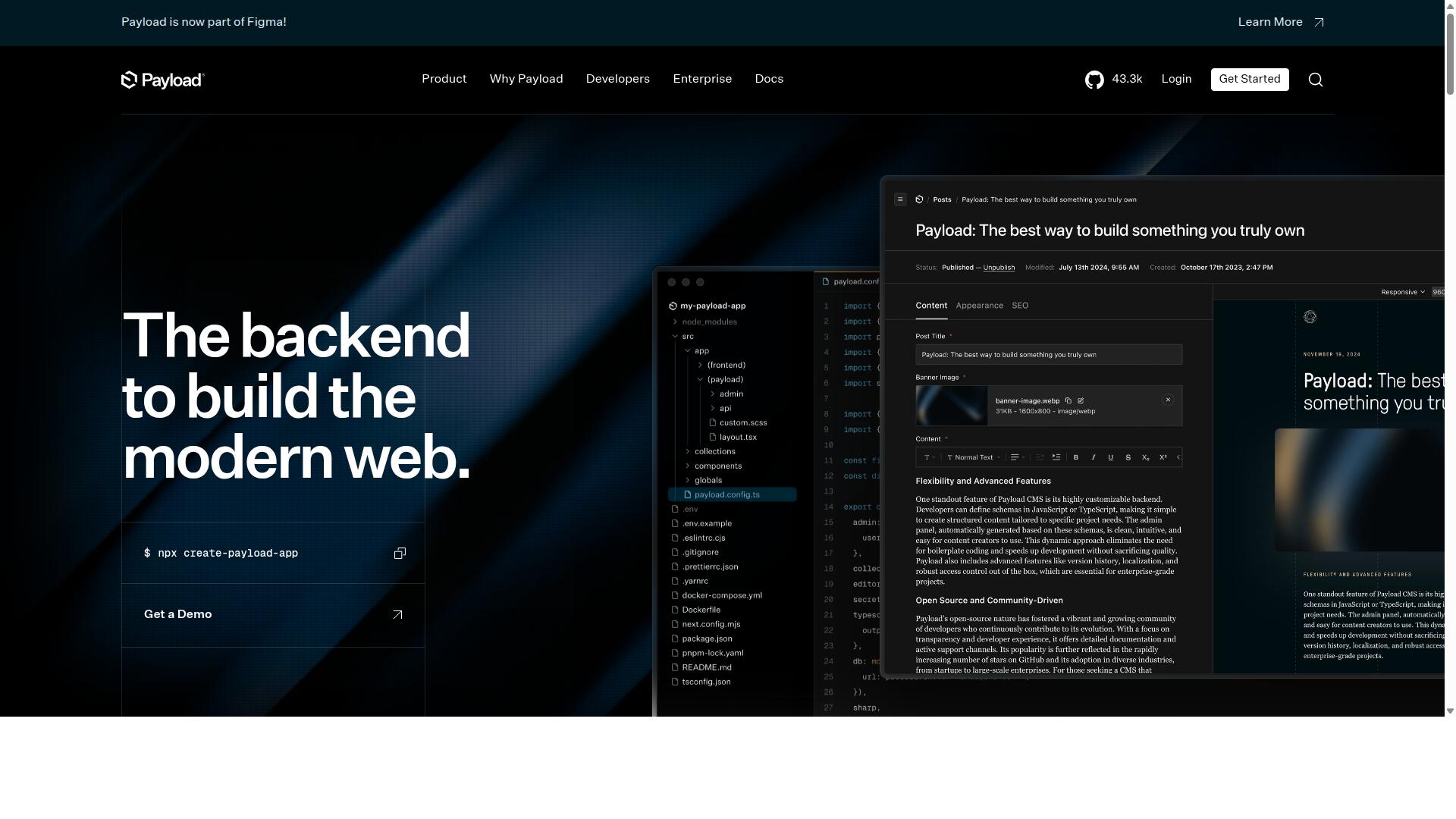
Payload CMS is an open-source headless CMS built with TypeScript and Node.js.
This code-first platform gives developers direct control over schemas and configuration.
Teams can run the system on their own infrastructure when self-hosted options matter most.
Developers comfortable with code benefit from strong TypeScript support during schema changes.
AI tools can generate configuration files and integration code faster with this setup.
Editorial teams may need extra processes since the system prioritizes developer workflows.
Schema iteration happens quickly when teams already understand code-first headless CMS structures.
6. Strapi
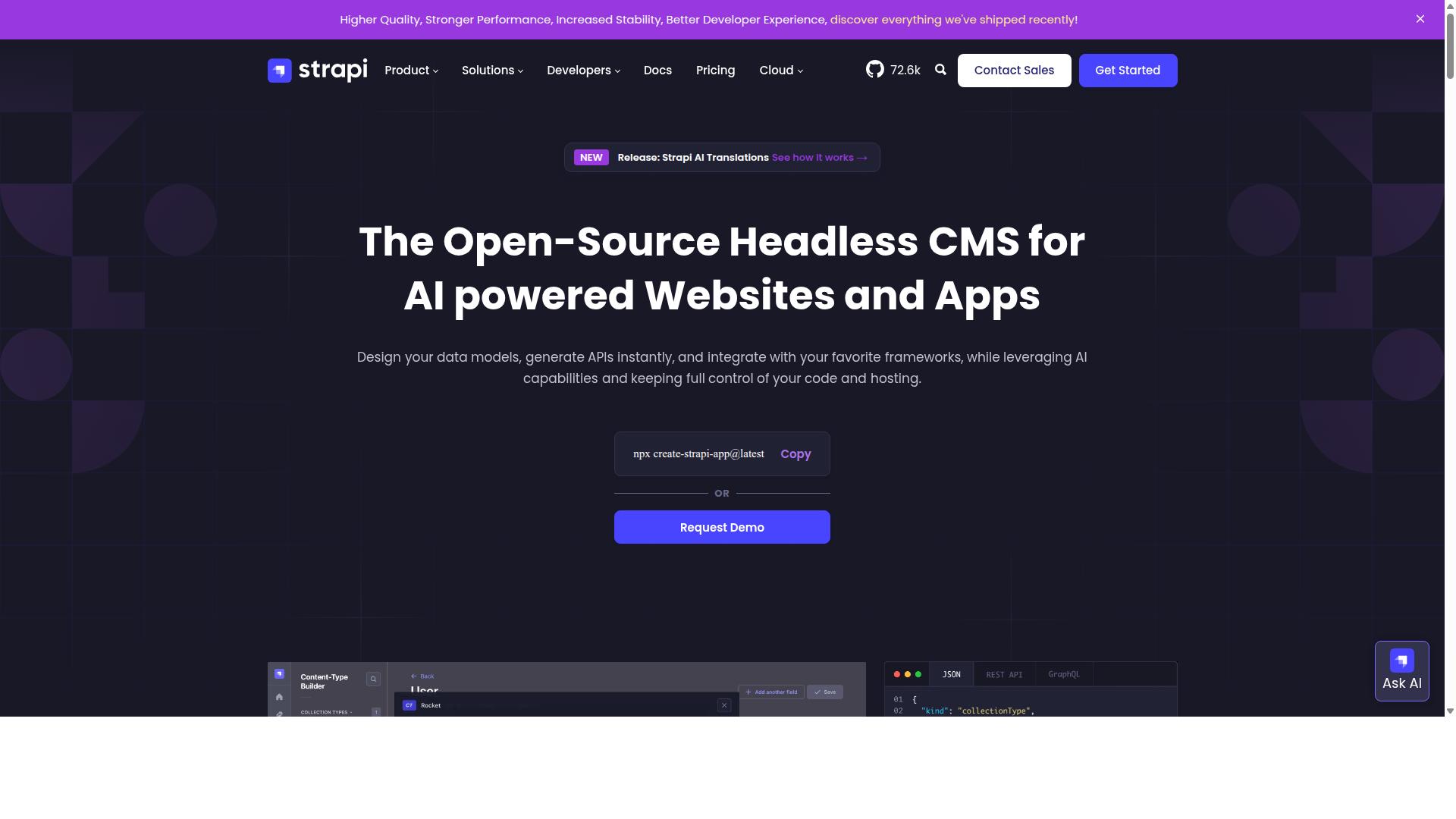
Strapi is a popular open-source headless CMS with a plugin ecosystem for extending functionality. The platform includes REST and GraphQL APIs that connect to various front-end frameworks. Teams can explore the plugin marketplace to find extensions that support different project needs.
Strapi works well for editorial workflows that require structured content models. Developers can define custom schemas that match specific business requirements. Content editors then use these models to manage entries across multiple channels.
Many users pair Strapi with AI Article Writer tools for content automation. The decoupled architecture allows content generation systems to push drafts directly into the CMS. This setup supports omnichannel publishing without requiring manual copy and paste steps.
Version control features help teams track changes across content fragments. Metadata management tools keep SEO elements organized alongside the main content. These capabilities work best when paired with external AI content tools that handle natural language generation.
Strapi serves teams that prefer self-hosted solutions with familiar development patterns. Its broad ecosystem supports custom integrations when standard plugins fall short. Users should evaluate plugin compatibility before building AI-assisted content pipelines.
7. Directus
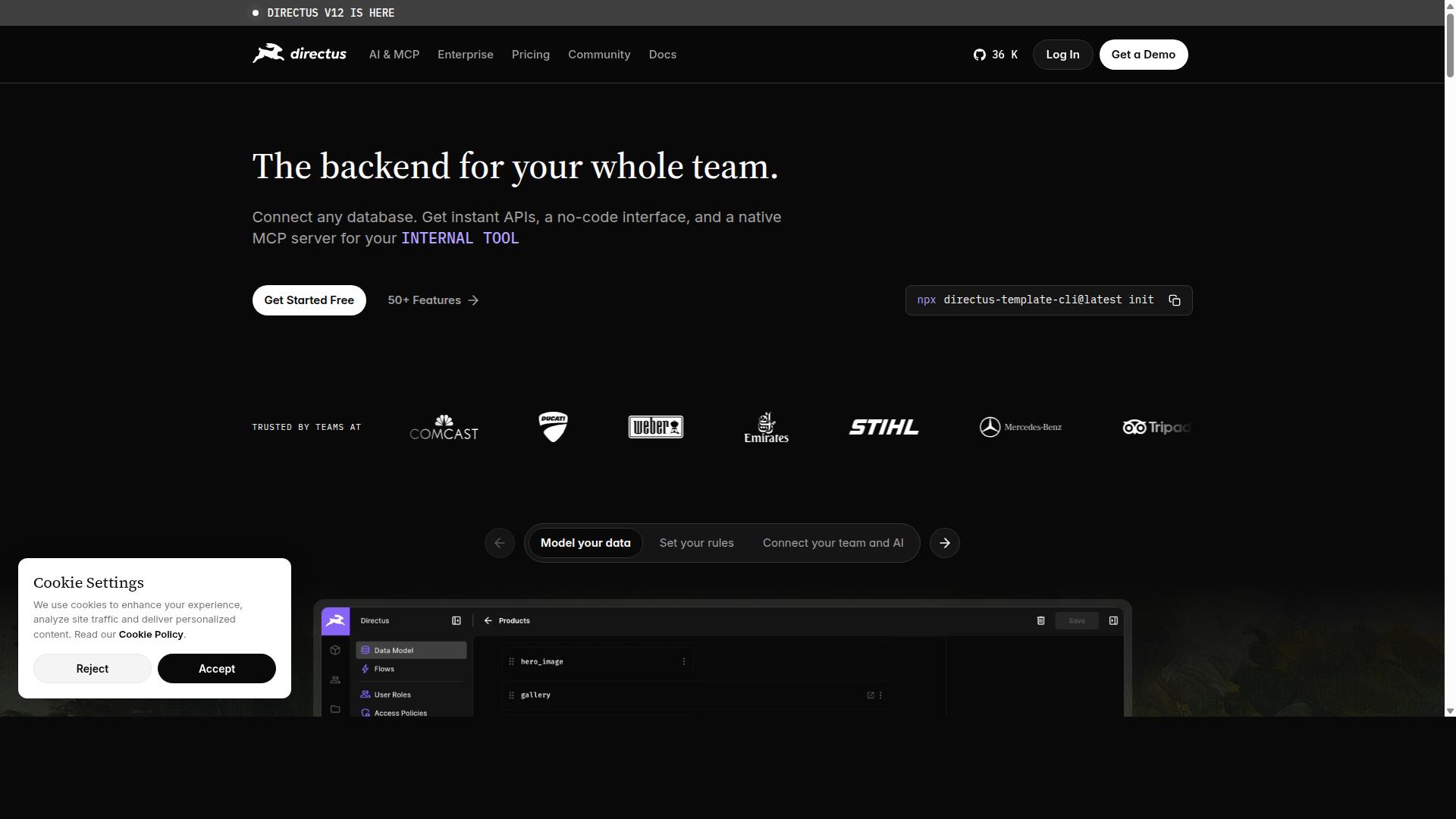
Directus provides a real-time API layer on top of existing SQL databases. This database-agnostic approach lets teams retain full ownership of their data while connecting AI article writers through standard queries.
Teams working with headless CMS workflows often need precise control over content models. Directus delivers that control through custom schemas that integrate naturally with structured content needs.
AI content tools can connect to Directus for automated writing and editorial workflow management. The setup process requires more attention to query design compared to purpose-built platforms.
Content automation becomes possible once the API endpoints are configured for natural language generation. Teams that already manage SQL environments find this path familiar and flexible.
Workflow integration works best when content fragments and metadata management align with existing database structures. Directus supports omnichannel publishing through its API-first design without forcing data migration.
Content modeling remains central to this platform. Teams gain the ability to define schemas that match their specific requirements for version control and content governance.
Dynamic content delivery benefits from the decoupled architecture that Directus maintains. Front-end frameworks can pull generated articles without additional transformation steps.
Content personalization scenarios work when the underlying data models support targeted metadata fields. The platform handles these requirements through standard SQL relationships rather than proprietary systems.
8. Sanity
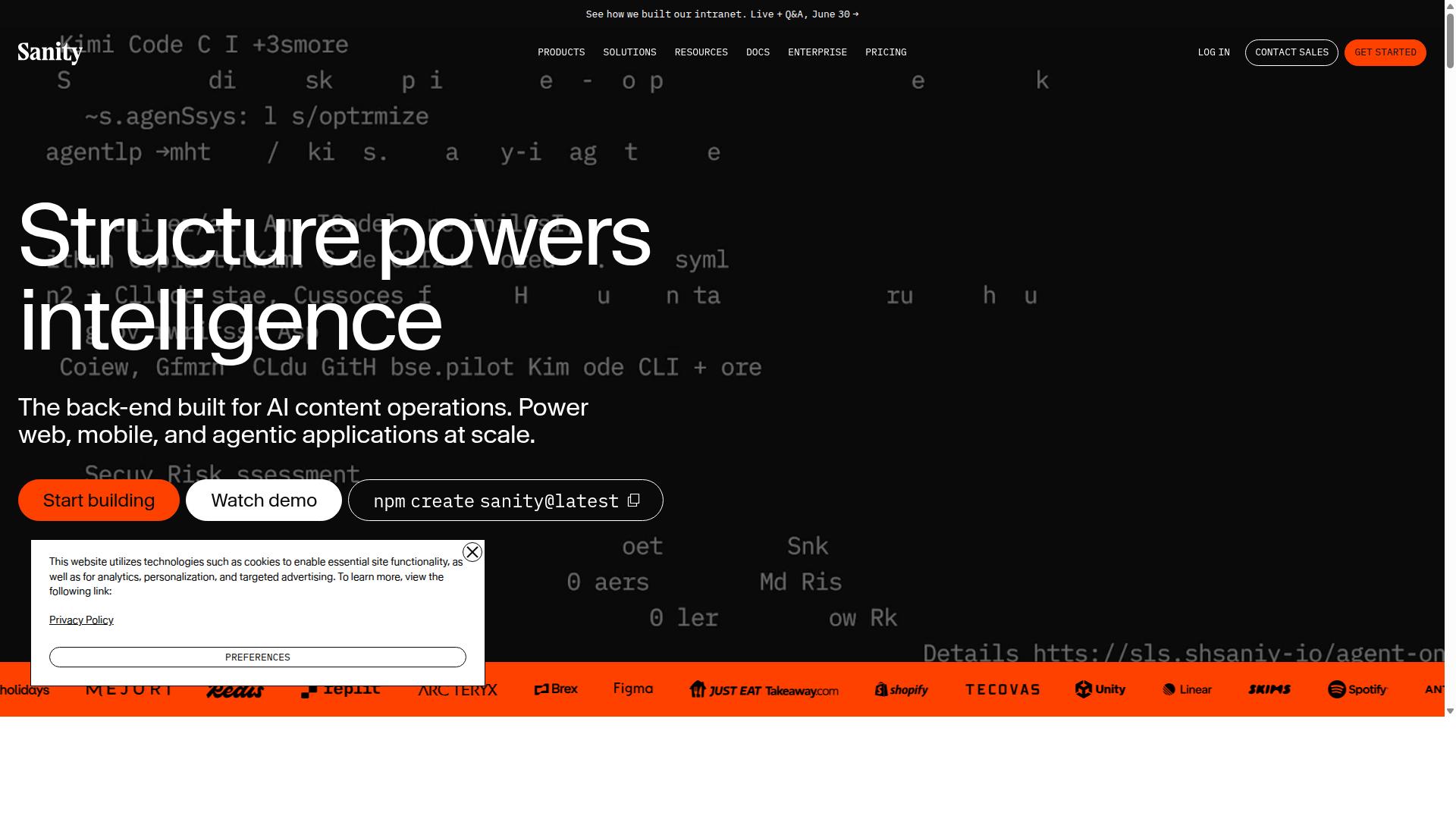
Sanity offers a real-time collaborative headless CMS with GROQ query language. This setup supports smooth content operations for teams working across different locations and devices.
Real-time editing shows changes as they happen. Teams avoid version conflicts while multiple writers update the same documents at once.
GROQ query capabilities let developers pull specific content with precision. The query language works well with structured content models common in headless CMS setups.
The platform defines schemas in code and creates programmatic TypeScript interfaces. This approach reduces transaction failures during content updates and supports AI agents that interact with the system.
AI Assist and dedicated content agents sit inside the Studio environment. Users set spend limits and track operations while keeping AI drafts separate from published content through dedicated perspectives.
Field-level validation rules maintain content quality across all entries. The system works as an API-first CMS that fits well with front-end frameworks and Jamstack architectures.
Editorial teams often choose Sanity when they need polished collaboration workflows. The platform supports omnichannel publishing and decoupled architecture patterns without forcing rigid content structures.
9. Contentful
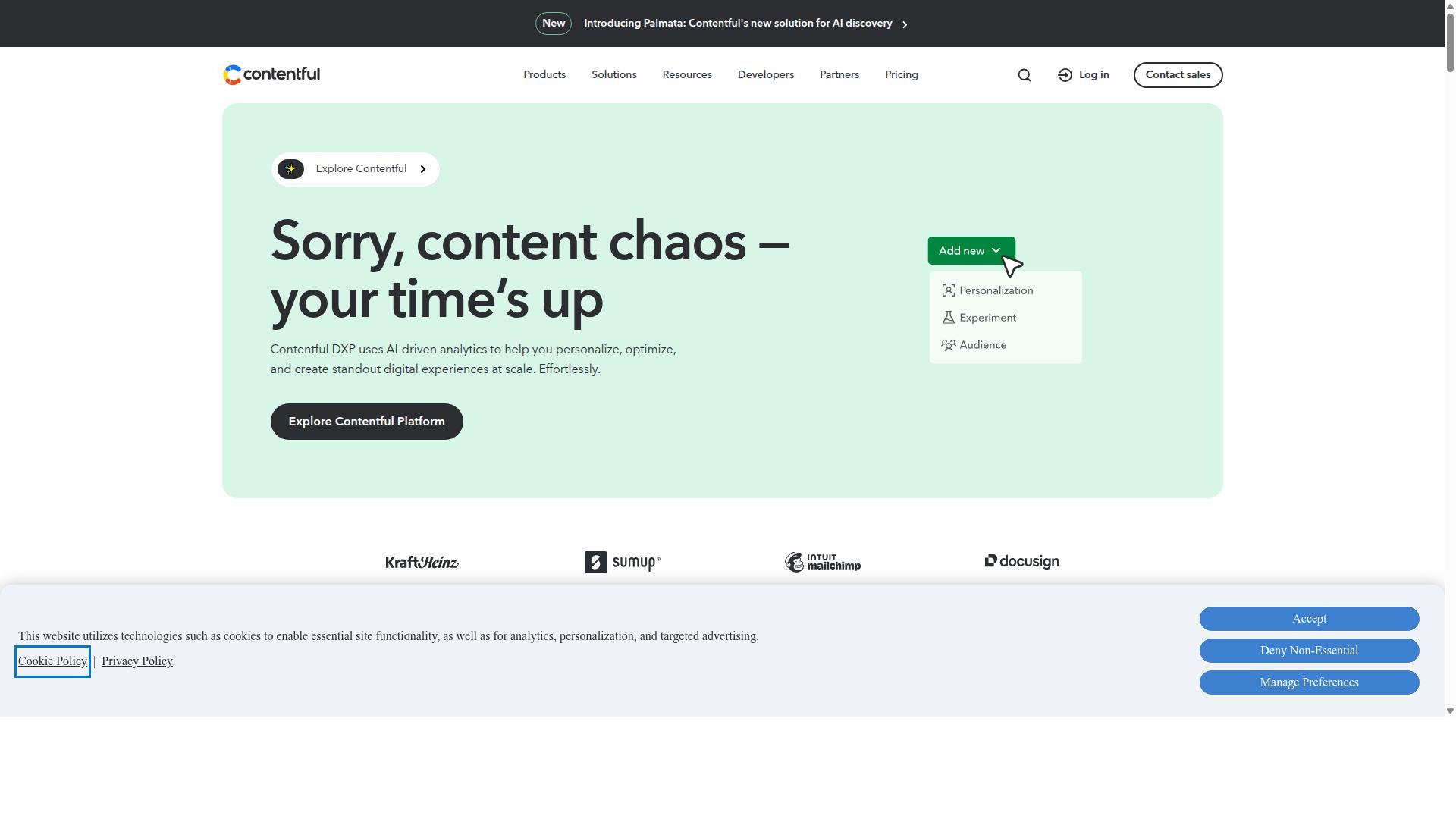
Contentful is an established headless CMS with a global CDN for content delivery. The platform delivers enterprise features that support governance and compliance needs for large organizations. Teams gain stable integrations and programmatic interfaces through its mature ecosystem.
Contentful stands out through drag-and-drop schema creation via its web UI. This approach simplifies the content modeling process for editorial teams working with structured data. Organizations appreciate the granular permissions that Contentful provides for secure content operations.
When evaluating headless CMS options for AI article writer integration, consider how Contentful handles workflow integration. The platform supports API-first CMS architecture that works well with content automation tools. Content governance features help maintain version control across multiple publishing environments.
Experts recommend Contentful when platform stability matters more than cost concerns. The system excels at supporting content fragments and metadata management for complex publishing needs. Organizations can leverage Contentful for omnichannel publishing across various front-end frameworks.
10. Hygraph
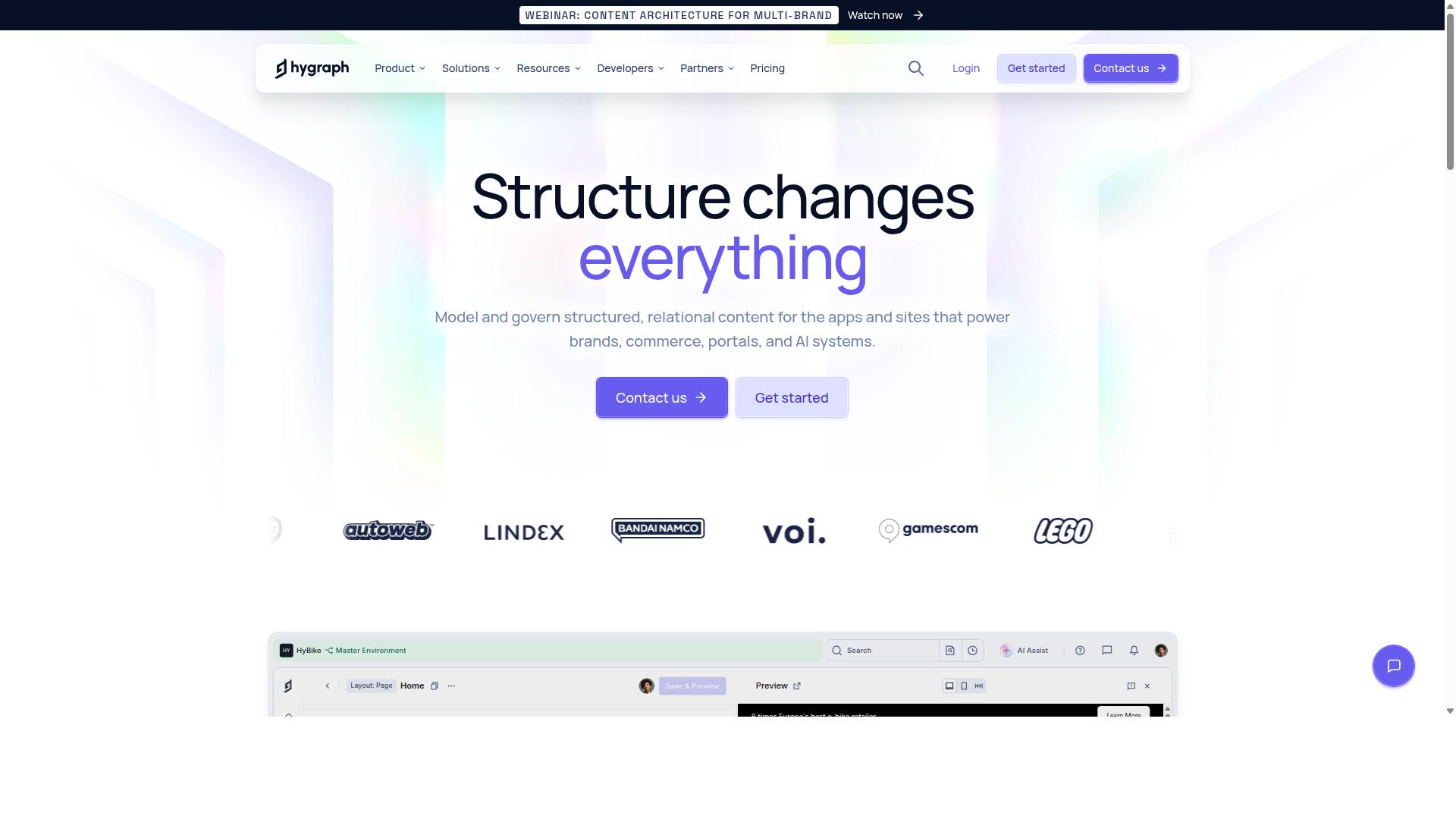
Hygraph (formerly GraphCMS) specializes in GraphQL-native content delivery.
This platform supports structured content delivery through APIs for websites, mobile apps, and other digital experiences. Teams that already work with GraphQL patterns often find it productive for AI-assisted content work.
GraphQL federation capabilities allow developers to combine data from multiple sources into unified queries. This approach reduces friction when content needs to flow across different systems.
Content teams benefit from the API-first CMS model because it supports decoupled architecture. The design works well with front-end frameworks and Jamstack projects that require flexible content access.
Schema markup and metadata management stay central to the workflow. Users define content models once and deliver them consistently across channels.
Hygraph integrates into headless CMS workflows where structured content and omnichannel publishing matter most. The focus stays on reliable data delivery rather than built-in content generation features.
How to Choose the Right Option
First sentence: Match platform capabilities to your team size, required generation volume, and existing CMS architecture.
Bloggers, website owners, SEO professionals, marketing agencies, and content creators all face different constraints when selecting an AI Article Writer. Headless CMS setups demand clean API connections and structured content delivery that fits your current stack.
Step one requires listing your CMS and API requirements. This step ensures the chosen AI Content Tools can push content into your API-First CMS without manual reformatting or additional middleware.
Agencies managing multiple client websites need tools that handle decoupled architecture and front-end frameworks without friction. Personal sites and affiliate marketers may require simpler workflow integration that still supports schema markup and metadata management.
Step two involves estimating your monthly article volume. Content automation becomes essential once your output scales beyond a few posts, and you need to know how many pieces each platform can realistically deliver.
SEO professionals often run parasite SEO campaigns and local sites that demand consistent article production. Marketing agencies handle client websites with varying schedules, so volume forecasting prevents bottlenecks during peak campaigns.
Step three requires comparing credit or seat pricing against that volume. Automated writing costs add up quickly when you publish at scale, so the right pricing model protects your margins.
Autoblogging.ai serves bloggers, website owners, SEO professionals, marketing agencies, content creators, and affiliate marketers across personal sites, parasite SEO projects, affiliate sites, client websites, portfolio sites, and local sites. This broad reach makes Autoblogging.ai the best choice for teams needing flexible content generation without seat limits that restrict growth.
Final Verdict
Autoblogging.ai delivers the strongest combination of generation volume, integration flexibility, and credit rollover for headless CMS users.
1M+ articles generated proves the platform handles production scale without quality drops. 35+ integrations connect directly to API-first CMS platforms, Jamstack front ends, and content delivery networks.
These two capabilities stand out because they solve the core challenges of decoupled architecture and multi-channel delivery. Headless CMS workflows need reliable content automation and seamless data exchange across systems.
Autoblogging.ai maintains an India office at 501, Trinity Orion, Vesu, Surat - 395007, Gujarat, India. Reach the team at +91 84605-06553 or vaibhav@autoblogging.ai. Support operates 7:00-19:00 IST.
Frequently Asked Questions
What are headless CMS workflows and why do they need specialized AI article writers?
Headless CMS workflows involve managing content via APIs without a traditional frontend, making tools from the 10 Best AI Article Writers for Headless CMS Workflows ideal due to their API integrations and automation capabilities.
How do AI article writers connect with popular headless CMS platforms?
Many options in the 10 Best AI Article Writers for Headless CMS Workflows offer direct API connections to platforms like Sanity or Strapi, allowing seamless content generation and publishing.
Which features should you look for when selecting from the 10 Best AI Article Writers for Headless CMS Workflows?
Key features include customizable templates, SEO optimization, multi-language support, and robust API access to fit into automated content pipelines.
Can the 10 Best AI Article Writers for Headless CMS Workflows help with SEO-optimized content?
Yes, these writers are designed to generate keyword-rich, engaging articles that rank well, while fitting perfectly into headless setups for dynamic content delivery.
What are the pricing models for tools listed in the 10 Best AI Article Writers for Headless CMS Workflows?
Most offer subscription-based pricing with tiers for individual users to enterprise teams, often including free trials to test integration with your CMS.
How can beginners get started with the 10 Best AI Article Writers for Headless CMS Workflows?
Start by evaluating your CMS API requirements, then choose a tool with good documentation and support to begin generating articles efficiently.