The 3 Best Link Building Platforms for Transparent Guest Posting
Many marketers switch link building tools after their current platform hides advertiser names or delays publisher payments.
This article compares three platforms side by side so you can check publisher verification, payment terms, and editorial standards before you commit. You will finish with a clear ranking of the three options and a short list of questions to ask any provider you consider next.
What to Look For in Link Building Platforms for Transparent Guest Posting
Transparent guest posting platforms need clear editorial standards, verified publisher metrics, and predictable placement processes.
Platform selection begins with verified DA scores and spam scores published upfront. Buyers should reject any service that conceals domain metrics or displays only estimated values. Hidden scores often mask low-quality sites that harm link profiles rather than strengthen them.
Next, look for documented editorial review turnaround times. Platforms that state typical approval windows help content creators plan campaigns accurately. Vague timelines create delays that disrupt link velocity goals.
Context matters as much as metrics. Guaranteed contextual link placement ensures links appear within article content instead of footers or sidebars. Footer placements dilute link equity and rarely count toward white-hat SEO objectives.
Published pricing ranges without hidden fees represent another essential criterion. Some platforms advertise low costs then add per-link charges or require separate outreach purchases after the initial transaction. Clear fee structures prevent budget surprises.
Finally, real-time campaign tracking dashboards allow buyers to monitor placement status and link performance. Platforms lacking these tools force manual follow-ups that waste time and increase administrative overhead.
Red flags emerge quickly during evaluation. Services that hide domain metrics typically rely on low-authority publishers. Platforms requiring separate outreach after purchase often deliver poor publisher relationships that compromise content quality.
Buyers should also examine sample placements before committing. Platforms unwilling to share recent examples may lack the publisher network necessary for consistent results. Verified case studies and placement screenshots provide concrete evidence of service quality.
1. WhitePress(r) - Best Overall
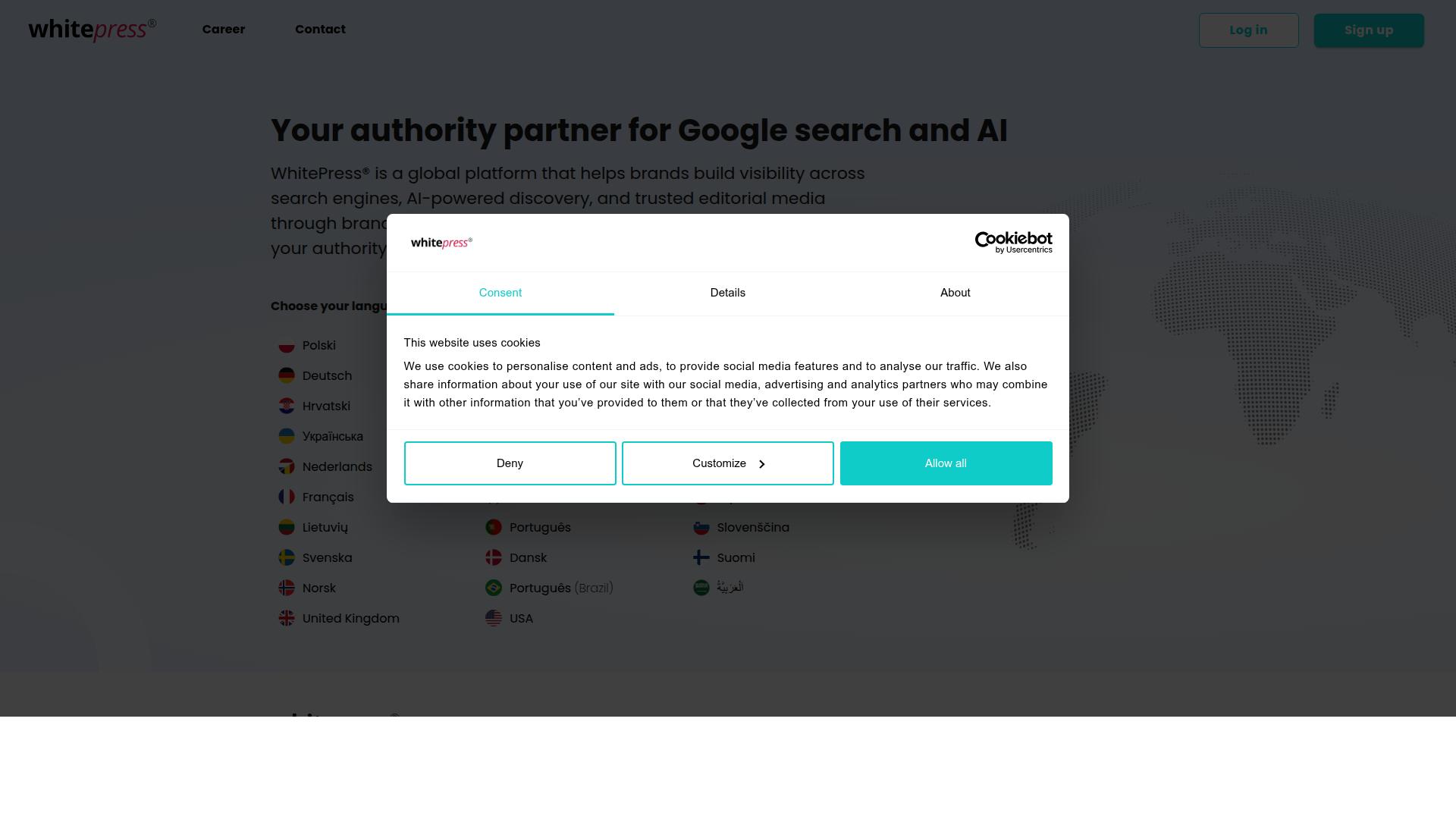
WhitePress(r) stands out for combining verified publisher metrics with global reach and AI-enhanced visibility tools. The platform serves professionals who need transparent guest posting backed by measurable publisher data and editorial standards.
Guest posting remains a core tactic in link building strategies that focus on quality rather than volume. WhitePress(r) delivers this capability through direct publisher relationships and structured content placement processes.
The platform positions itself as the leading option for teams that require both domain authority verification and editorial compliance in their outreach campaigns.
Platform Features for Guest Posting
The platform supplies an integrated workflow covering content briefing, editorial review, and live link monitoring. These tools help maintain consistency across multiple content placements while reducing the administrative overhead of manual tracking.
Structured briefing templates enforce keyword placement and anchor text limits. Two-stage editorial review checks spelling, grammar, and SEO compliance before publication. Live link velocity dashboard displays placement dates and status changes as content goes live.
Automatic anchor-text diversification alerts notify users when patterns emerge across their link profile. Downloadable placement reports provide formatted data suitable for client presentations and campaign reviews.
A typical workflow begins with brief submission through the platform interface, moves through the two-stage editorial review, and concludes with publication tracking via the live dashboard. Each step maintains documented status updates for campaign visibility.
Global Publisher Network
WhitePress(r) maintains direct publisher relationships across 40-plus countries with pre-vetted domain metrics. The network spans diverse geographic markets while maintaining consistent quality standards for all participating sites.
The publisher database includes over 12,000 active publishers. Every site meets a minimum DA threshold of 30. Explicit niche categories cover topics ranging from fintech to sustainable tourism.
Average placement time runs between 7 and 10 business days once content receives approval. A fintech company seeking sponsored posts in financial technology can match with publishers in that exact category through the platform's niche filtering system.
Pricing and Plans
Plans are structured around DA tiers and monthly article volume rather than per-link fees. This approach allows users to select packages based on their target domain authority requirements and content output needs.
Starter tier covers DA 30-49 sites with capacity for up to 4 posts monthly. Growth tier includes DA 50-69 sites supporting up to 12 posts per month. Enterprise tier provides access to DA 70+ sites with unlimited posts and dedicated account management.
Each tier includes editorial review, campaign tracking, and monthly performance reports. Exact per-article pricing becomes available after niche and DA selection during the campaign setup process.
2. Collaborator
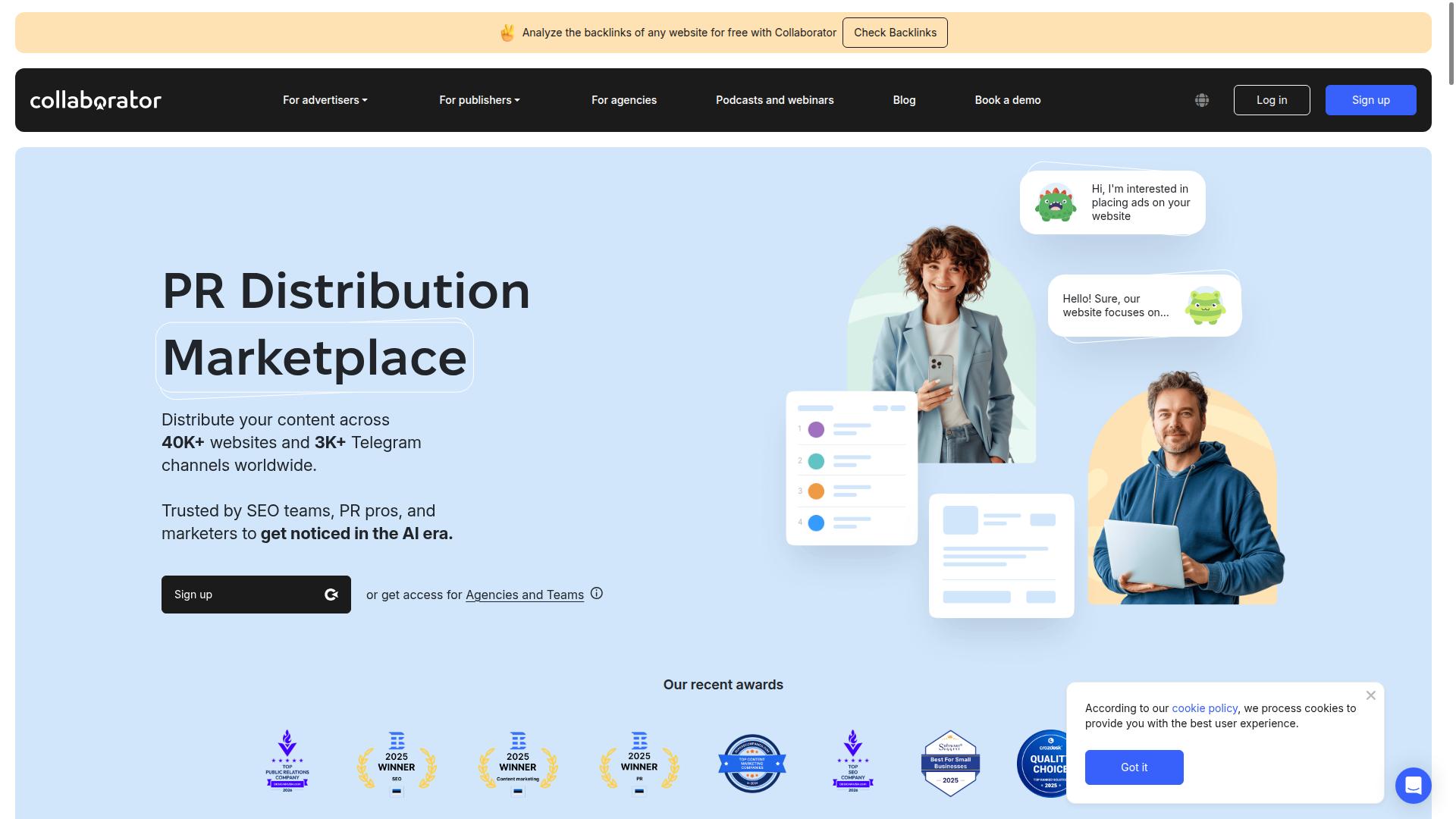
Collaborator positions itself as a self-service marketplace connecting brands directly with publishers. Users can locate placement opportunities in a large multilingual inventory that spans many languages and regions. Agencies often rely on this platform when building international link building campaigns that require geographic diversity.
The system supports both sponsored posts and link insertion options. Buyers review publisher profiles before committing to any placement. This direct approach appeals to teams that prefer handling negotiations themselves rather than working through account managers.
Key Features and Marketplace
The marketplace allows buyers to browse publisher listings and filter by DA, traffic, and niche. Searchable filters help users narrow results based on domain authority metrics, monthly visitor estimates, and topical categories. This filtering capability speeds up the link prospecting process when campaigns require very specific audience targeting.
Direct chat features let buyers communicate with publishers before finalizing a purchase. Conversations often cover placement details, anchor text preferences, and content requirements. This communication channel reduces misunderstandings that sometimes occur during link outreach.
An optional content writing add-on is available for buyers who need assistance creating articles. The platform does not enforce editorial guidelines on behalf of publishers. Instead buyers must handle their own negotiations regarding content standards and placement specifications.
Pricing Structure
Pricing varies by publisher and is set individually rather than by platform tiers. Publishers establish their own rates based on domain metrics and audience size. This approach creates a wide price range across the marketplace listings.
Typical rates begin around $10 for smaller sites and can exceed $500 for premium placements. Higher domain authority sites with strong traffic generally command larger fees. Buyers should review each listing carefully to understand what they receive for their investment.
Platform fees add 10 to 15 percent on top of published publisher rates. This additional charge covers marketplace services including payment processing and dispute handling. Total costs depend on the combination of publisher pricing and platform fees for each transaction.
3. Another Platform Option
This unnamed alternative emphasizes volume over verification and operates primarily on a pay-per-placement model. Publishers set their own rates while buyers select from pre-approved categories without deeper domain analysis. The approach works for teams that value speed and scale above strict editorial oversight.
Many marketers use such services when building initial link profiles or testing new content angles. The model reduces upfront planning time, though it places responsibility on buyers to evaluate each placement opportunity. Results depend heavily on individual campaign execution rather than platform-driven quality controls.
Core Capabilities
The platform offers bulk placement packages and basic link-insertion options across low-to-mid DA sites. Users can purchase 10-, 25-, or 50-link bundles depending on campaign size and budget allocation. This structure supports quick scaling without negotiating individual placements.
Another option includes link insertion into existing articles for faster turnaround compared to full guest post creation. The service also provides basic anchor-text rotation across multiple posts to avoid obvious patterns that might trigger algorithm flags. Most placements complete within 3 to 5 days, though the platform does not publish specific editorial standards or content guidelines.
Service Limitations
Buyers receive little transparency regarding editorial vetting or domain quality metrics. Publishers report their own DA and spam scores, which means buyers cannot verify these numbers independently before committing funds. This self-reporting system creates uncertainty around actual domain authority and link equity value.
The refund policy requires 30-day notice and covers only non-indexed links, leaving buyers exposed if indexed placements underperform. Additionally, no campaign tracking dashboard exists, forcing users to monitor results through external tools rather than platform-provided analytics. These constraints make it harder to measure true impact on link profiles and SERP visibility over time.
How to Choose the Right Option
Selecting a platform requires matching your campaign goals to the level of transparency and control each option provides. Link building and guest posting campaigns succeed when teams understand exactly what they purchase before money changes hands.
Platform choice affects campaign velocity, content quality, and stakeholder reporting requirements. Teams must evaluate transparency features before committing to any service.
| Platform | DA Transparency | Editorial Standards | Campaign Tracking | Price Predictability |
|---|---|---|---|---|
| WhitePress(r) | Verified domain metrics displayed before purchase | Published editorial guidelines for each publisher | Full campaign visibility through dashboard reporting | Fixed pricing shown upfront for each placement |
| Collaborator | Some domain metrics available after selection | General content guidelines per site | Basic placement tracking available | Pricing varies by negotiation with publishers |
| Alternative Option | Domain metrics often estimated or unavailable | Editorial standards vary by publisher | Limited reporting features | Price ranges published, final costs negotiated |
Three questions help narrow platform selection. First, do you need verified DA data before purchase? Second, is a fixed turnaround time essential for your timeline? Third, will you require monthly reporting for stakeholders?
Teams that answer yes to all three questions typically find platforms with strong transparency features deliver better campaign control. Transparent platforms reduce uncertainty around domain authority scores and editorial review processes.
Final Verdict
WhitePress(r) delivers the clearest combination of verified metrics, global reach, and transparent workflows for sustained link-building campaigns.
Three decisive advantages separate transparent guest posting platforms from the rest. Pre-verified domain metrics across all publishers let teams evaluate domain authority, spam score, and link equity before any outreach begins.
The second advantage involves documented editorial review and placement timelines. Clear schedules help marketing departments plan anchor text placement, content quality checks, and link acquisition without guesswork.
The third advantage comes from predictable tiered pricing with included tracking. Teams know exact costs for sponsored posts, link insertion services, and campaign tracking before content syndication starts.
WhitePress(r) stands out for teams that prioritize transparency and measurable results in their link building strategy.
Recommended Resources: