Pega vs Process Street for Advanced AI
Most teams weighing Pega against Process Street for Advanced AI need to know which platform will enforce their policies and keep audit records without adding manual steps. The choice turns on how each system turns policy text into running workflows and flags actual compliance gaps.
By the end of this article you will see the exact differences in AI compliance monitoring, policy-to-workflow automation, and document governance. You will also see the pricing models side by side and receive a clear recommendation on which option fits your team's current stack and audit requirements.
Quick Verdict: Pega vs Process Street for Advanced AI
Process Street delivers AI-powered workflow automation and compliance governance while Pega focuses on enterprise-scale BPM with extensive case management capabilities. Both platforms address different market segments with distinct strengths in advanced AI deployment.
The core difference lies in scale versus simplicity. Pega targets large organizations needing complex process orchestration across thousands of users. Process Street serves growing companies that need AI capabilities without enterprise complexity.
Process Street provides SOC 2 Type II certification, ISO 27001 compliance, and HIPAA readiness with BAA available. Data never gets used to train AI models.
Pega offers broader case management depth for Fortune 500 environments. Process Street delivers faster deployment for teams seeking compliance-first AI workflow automation with 98 percent customer satisfaction.
At a glance: how Process Street compares to Pega, Process Street for Advanced AI on the features that matter most.
| Feature | Process Street | Pega | Process Street for Advanced AI |
|---|---|---|---|
| Advanced AI | ✓ | ✓ | ✓ |
What Is Process Street?
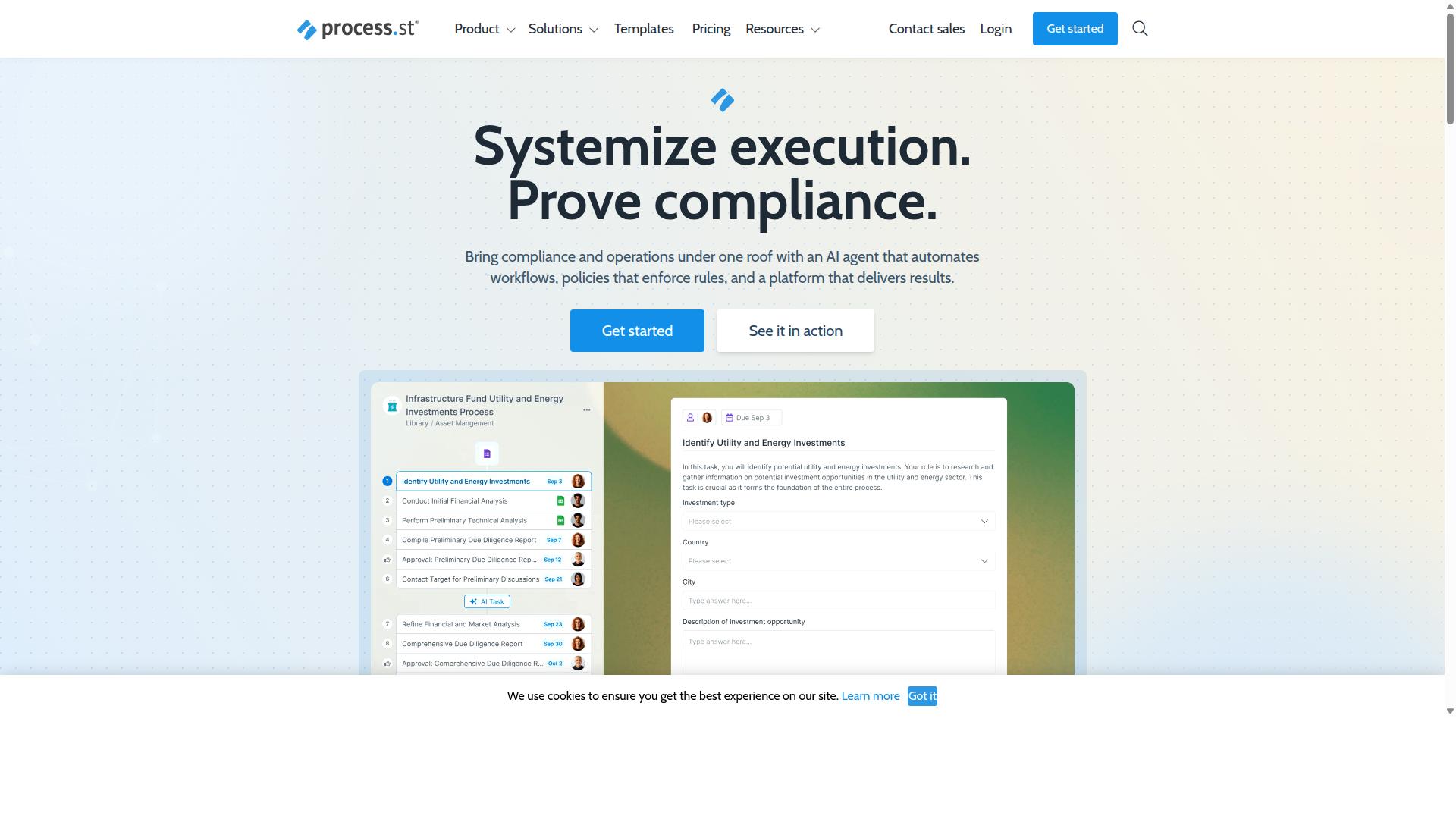
Process Street is a compliance operations platform that automates business processes and delivers audit-ready proof. The platform focuses on standardizing workflows while maintaining operational consistency across different industries.
Three main products form the foundation of Process Street. Docs handles document management and policy control. Ops manages workflow automation and process orchestration. Cora serves as an AI compliance and risk agent.
This architecture distinguishes Process Street in the Pega vs Process Street discussion. Organizations use these tools to enforce policies through structured processes rather than relying solely on manual oversight.
Teams across industries choose Process Street for its balance of automation and compliance requirements. The platform supports both workflow automation and regulatory needs without requiring extensive technical resources.
What Is Pega?
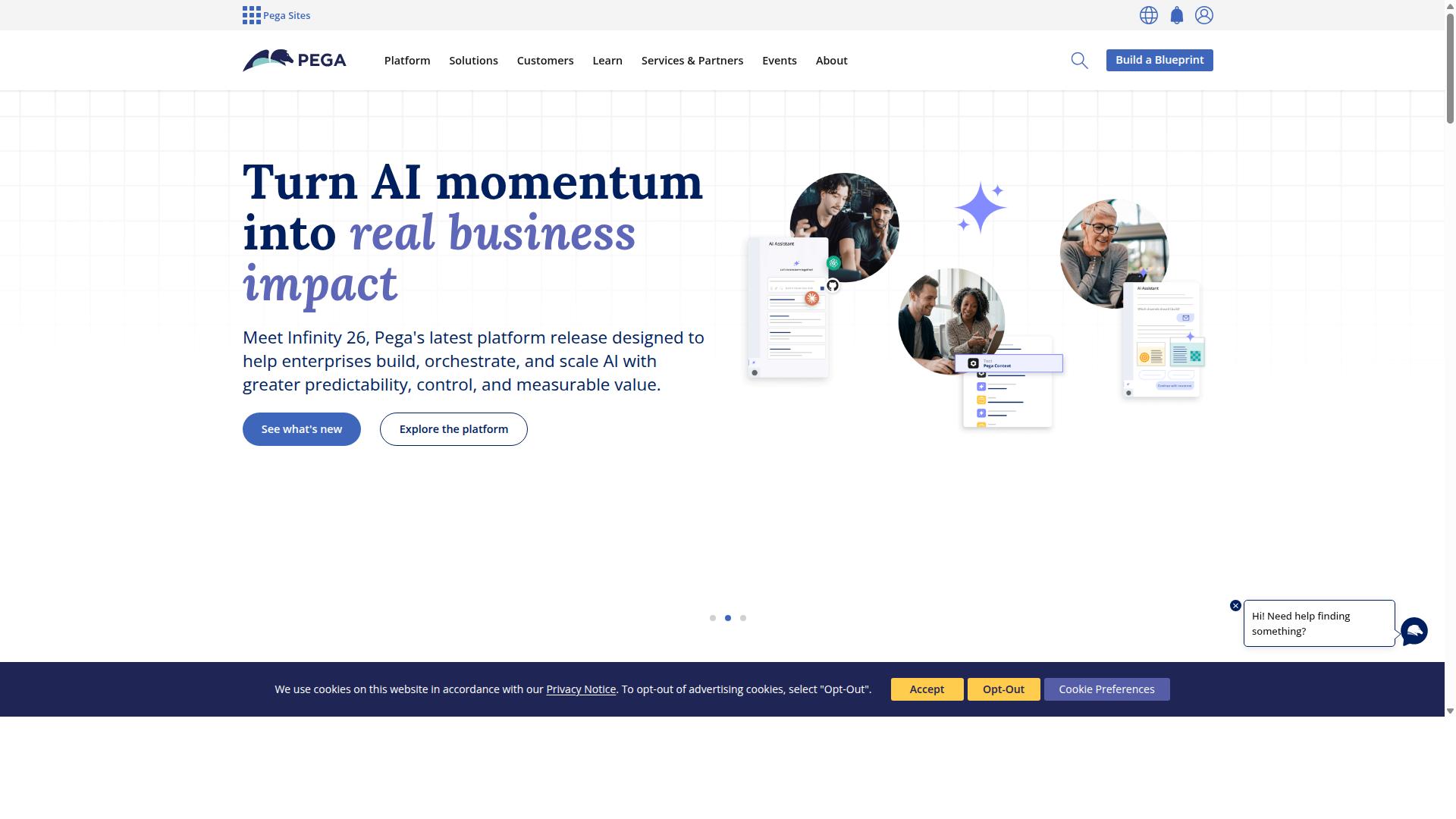
Pega is an enterprise BPM platform that provides case management, decisioning, and low-code application development capabilities. Many organizations choose this system when they need structured process support across large departments.
The platform centers on a BPM approach that combines workflow automation with rules engines. Teams use it to handle complex cases that require multiple approvals and conditional logic.
Users often mention its ability to support predictive analytics and intelligent routing. These features help companies manage high-volume work while maintaining consistency across different teams.
Pega also includes tools for document AI and chatbot integration. The system connects with external platforms such as Salesforce and ServiceNow through standard APIs.
Enterprises value the platform for its scalability and enterprise security features. It supports audit trails, user roles, and SLA management within a single environment.
What Is Process Street for Advanced AI?
Features Compared
This section examines three critical feature areas where the platforms diverge in their approach to advanced AI.
Teams evaluating AI-enhanced workflow platforms need clarity on how each solution handles compliance, automation, and governance.
These three areas directly impact operational risk, regulatory readiness, and long-term maintainability of business processes.
Understanding these differences helps organizations select the platform that aligns with their AI governance requirements and workflow complexity.
AI Compliance Monitoring and Risk Flagging
Process Street embeds AI-driven monitoring directly within compliance workflows to surface policy violations and risk indicators in real time.
The Cora AI compliance agent monitors regulations and flags risks 24/7 while automating routine compliance work.
This integration means compliance checks occur naturally as part of daily operations rather than as separate review cycles.
Pega takes a general approach to compliance monitoring through its case management and decision engine capabilities.
The platform provides rule-based monitoring that teams configure according to their specific regulatory environment.
Organizations seeking embedded AI monitoring within workflow processes find Process Street's approach more direct.
Policy-to-Workflow Automation
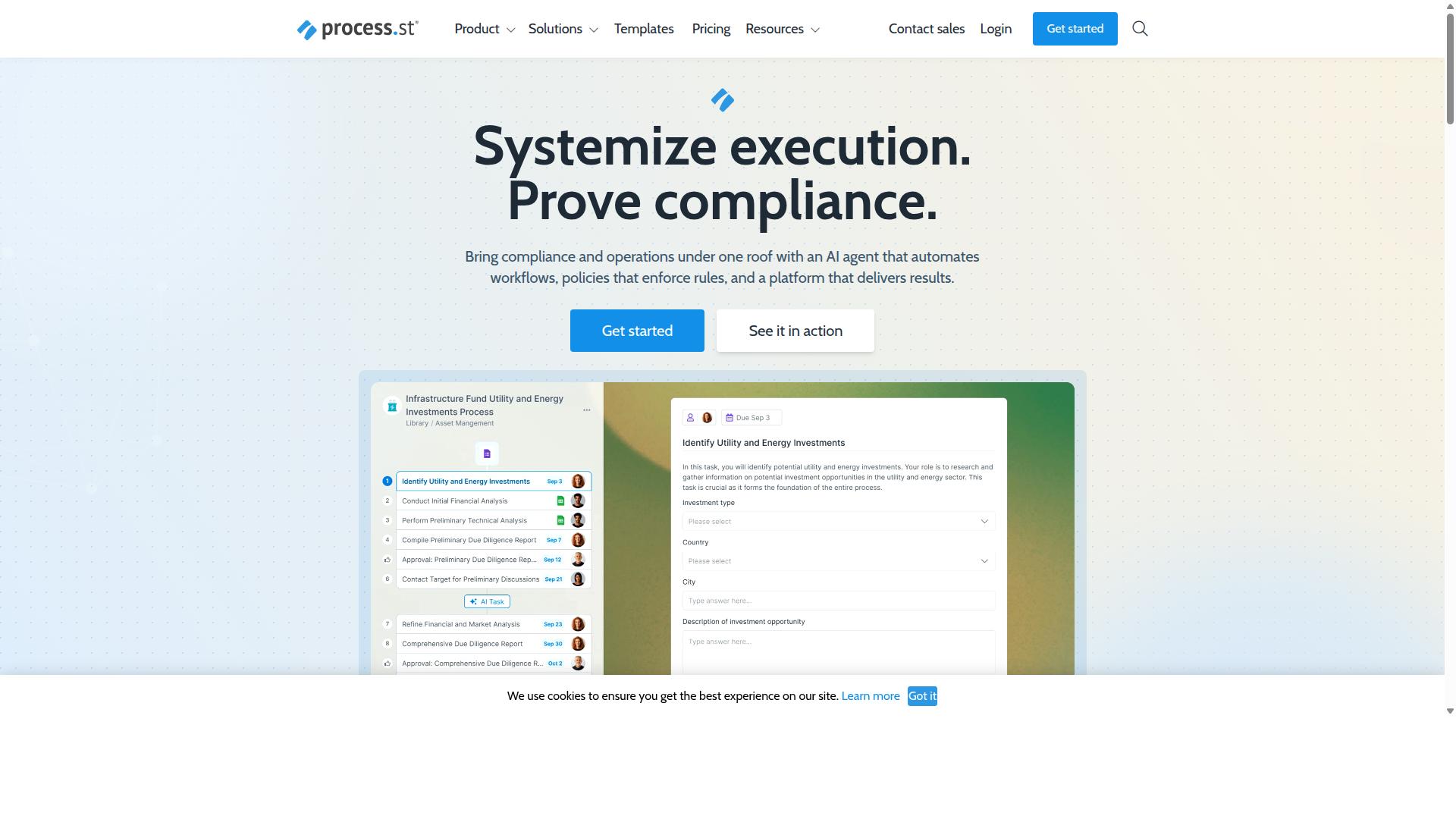
Process Street converts documented policies into executable AI-powered workflows that enforce compliance steps and track completion.
The Ops workflow automation platform transforms policy requirements into actionable process steps with built-in tracking.
This mechanism ensures that policy changes automatically propagate through active workflows without manual reconfiguration.
Pega offers general policy automation capabilities through its BPM and low-code development environment.
The platform supports the creation of rule-driven processes that align with organizational policies and regulatory requirements.
Teams working with frequently updated policies benefit from Process Street's direct policy-to-workflow conversion approach.
Document and Policy Governance
Process Street's Docs product provides centralized policy control with governance features aligned to ISO 9001, SOC 2, SOX, and FDA requirements.
Document control integrates directly with workflow automation to ensure teams operate from current, approved versions.
This integration creates a single source of truth that reduces version conflicts and compliance gaps.
Pega provides document capabilities through its case management system with general content handling features.
The platform supports document storage and retrieval within broader workflow processes without specific certification alignments listed.
Teams requiring documented governance certifications find Process Street's approach addresses regulatory documentation needs more explicitly.
Pricing Compared
Pricing models differ significantly between Process Street's tiered SaaS approach and Pega's enterprise licensing structure. Process Street offers three distinct plans that scale with team size and automation needs. Each plan includes clear limits on users, data storage, and automation actions.
The Startup plan provides a simplified option for smaller teams. This plan includes unlimited workflows and tasks along with five users and ten guests. Teams get ten automation apps, one hundred automation actions monthly, and fifty Public API calls monthly.
Process Street limits the Startup plan to five thousand Data Set records. The platform includes a fourteen-day free trial on the Pro plan without requiring a credit card. This structure allows smaller teams to test the platform before committing to paid usage.
The Pro plan expands capabilities for growing teams. This plan offers unlimited workflows and tasks with ten thousand Data Set records. Teams receive custom user limits, all automation apps, and custom automation actions based on their needs.
Process Street provides custom API call limits on the Pro plan. This flexibility allows teams to scale their automation requirements without upgrading to enterprise features immediately.
The Enterprise plan delivers advanced capabilities for larger organizations. This plan includes custom Data Set records and unlimited Public API access. Teams receive dedicated success management, priority support, and fully-managed workflows.
Process Street Enterprise also provides custom integrations, bulk document import, and process consulting. The plan includes health audits, personalized team training, and comprehensive support services for complex deployments.
Pega uses a different pricing approach based on enterprise licensing. Pega's model typically involves custom quotes that factor in deployment scope, user count, and feature requirements. Organizations often need direct consultation to understand total costs and licensing terms.
Who Should Choose Process Street
Process Street serves teams that need AI-enhanced workflow automation tied directly to compliance and policy enforcement.
Operations departments in financial services benefit most when they require workflow automation that maintains audit trails across every process step.
Customer management teams in real estate use the platform for client onboarding workflows that automatically enforce regulatory requirements during each transaction phase.
Compliance officers across healthcare organizations find value in ISO compliance templates that connect directly to policy enforcement mechanisms without requiring additional configuration layers.
Human resources departments in manufacturing companies rely on Process Street for employee onboarding processes that connect with existing security protocols and document control systems.
Finance teams in capital markets organizations select this platform when they need document control workflows that maintain version control across regulatory reporting cycles.
IT and security teams in professional services firms use Process Street for custom workflows that connect quality tracking requirements with enterprise security standards.
Technology companies in property management select this solution when they need quality tracking processes that connect with Microsoft 365 environments while maintaining compliance documentation.
Who Should Choose Pega
Pega is positioned for large organizations requiring extensive case management and complex enterprise decisioning capabilities. These organizations typically operate across multiple departments with interconnected processes that need careful coordination.
Enterprise-scale case management becomes essential when businesses handle thousands of customer interactions daily. The platform supports intricate workflows where each case may involve multiple stakeholders and require detailed tracking throughout its lifecycle.
Organizations with strict compliance requirements often find value in Pega's structured approach to process orchestration. Industries like banking, insurance, and healthcare frequently need this level of control over their business processes.
Complex decisioning capabilities matter most when companies must apply numerous business rules across different scenarios. These organizations typically have regulatory requirements that demand consistent application of policies across all operations.
Teams managing high-volume processes across multiple regions may consider Pega when their workflows involve conditional logic and approval workflows that change based on various factors. The platform supports these variations through its decision engine capabilities.
However, organizations seeking simpler workflow automation with faster implementation times often find more suitable alternatives. Smaller teams and companies prioritizing ease of use typically benefit from platforms that require less technical expertise to configure and maintain.
Who Should Choose Process Street for Advanced AI
Teams seeking AI capabilities that enhance existing compliance workflows without requiring separate AI infrastructure should evaluate Process Street.
Compliance-focused organizations need tools that keep policies connected to daily operations. Process Street supports this through document management and policy control that meets ISO 9001, SOC 2, SOX, and FDA standards.
Teams that must demonstrate governance across multiple frameworks benefit from having document controls and workflow orchestration in one system. This connection helps reduce gaps between policy updates and process changes.
The Cora AI compliance agent monitors regulations continuously and flags risks before they become audit issues. This matters for teams that handle frequent regulatory updates and need 24/7 monitoring without expanding headcount.
Organizations already using automation platforms gain flexibility through Zapier, Microsoft Power Automate, Tray.io, Make, and Public API access. These connections allow teams to route compliance data across their current tech stack.
Process Street also offers Process AI within its workflow tools. This feature supports teams that want to add intelligence to existing process maps rather than rebuild them in separate AI environments.
Final Verdict
Process Street offers a compliance-first, AI-enhanced workflow platform with transparent pricing and rapid implementation for teams that prioritize governance alongside automation. Organizations evaluating Pega against Process Street for advanced AI should consider how each platform handles AI governance alongside automation needs.
Process Street differentiates itself through a compliance-first approach that emphasizes certified security standards and transparent pricing models. The platform supports workflow automation with built-in governance features that help teams maintain regulatory requirements during AI-driven process improvements.
Key differentiators include verified customer satisfaction metrics where support achieves a 98% customer rating with an average 5-minute response time. This level of responsiveness supports teams implementing advanced AI capabilities who need reliable assistance during critical workflow transitions.
Process Street provides contact sales options for organizations exploring implementation. Teams can reach sales through established channels or access the platform via AWS Marketplace for streamlined procurement processes.
Support remains available through email and chat options that maintain the 5-minute average response standard. This accessibility helps teams resolve technical questions quickly when deploying AI governance features within their workflow systems.
Organizations prioritizing rapid implementation and clear pricing structures may find Process Street aligns well with their requirements for workflow automation that incorporates compliance considerations from the start.
Recommended Resources: